
Songkran Festival in Thailand
Thailand’s New Year festival — water, family, blessings, traditions and celebrations across the country.
Songkran is Thailand’s traditional New Year festival. Thai New Year’s Day falls on 13 April, and the main public holiday period is usually around 13–15 April. In some places, especially popular tourist areas and parts of northern Thailand, local celebrations can run longer. This year 2026 the festival officially opens on the 11th of October through to the 19th of October.

Most visitors know Songkran for the water fights, but the festival has a much deeper meaning. It is a time for family, merit-making, cleaning the home, paying respect to elders, washing Buddha images, and symbolically washing away bad luck from the old year.
What is Songkran?
Songkran is the traditional Thai New Year festival. The word comes from Sanskrit and refers to a change or movement, marking the passing into a new year.
In Thailand, Songkran is much more than one big water fight. The traditional meaning of the festival is about cleansing, renewal, family, respect and beginning the new year with a clear mind.
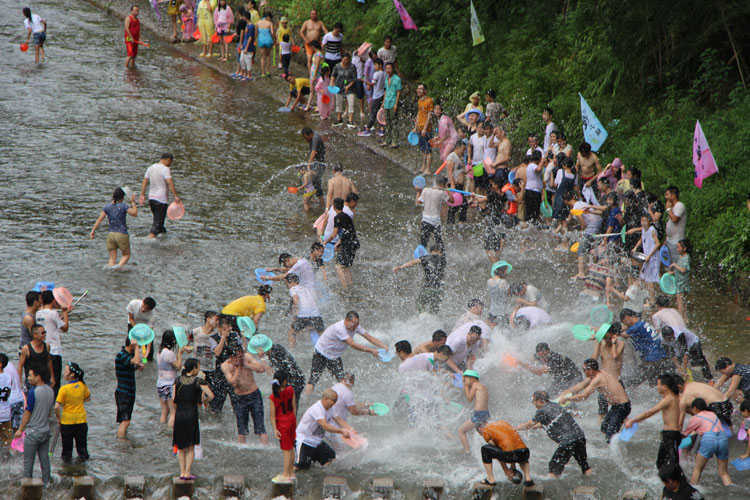
Songkran is now recognised internationally as part of Thailand’s cultural heritage, but at street level it is still very much a living festival. You will see families going to temples, young people pouring water over the hands of elders, Buddha images being washed, and entire streets turning into wet, noisy, happy chaos.
Songkran Traditions
In the days leading up to Songkran, many Thai families clean their homes. This is believed to clear away bad luck from the old year and make room for good luck in the new one.
On Songkran day, many people visit temples to make merit, offer food to monks, and take part in ceremonies. Buddha images are gently washed with scented water as a symbol of purification and respect.
Another important tradition is rod nam dum hua, where younger people pour scented water over the hands of parents, grandparents and elders, asking for blessings for the new year.
- Cleaning the home: clearing out the old year and welcoming the new one.
- Making merit: offering food to monks and visiting temples.
- Washing Buddha images: a respectful New Year purification ritual.
- Respecting elders: pouring water over the hands of older relatives and asking for blessings.
- Returning home: many Thai people travel to be with family, so transport can be packed.

The Water Fights
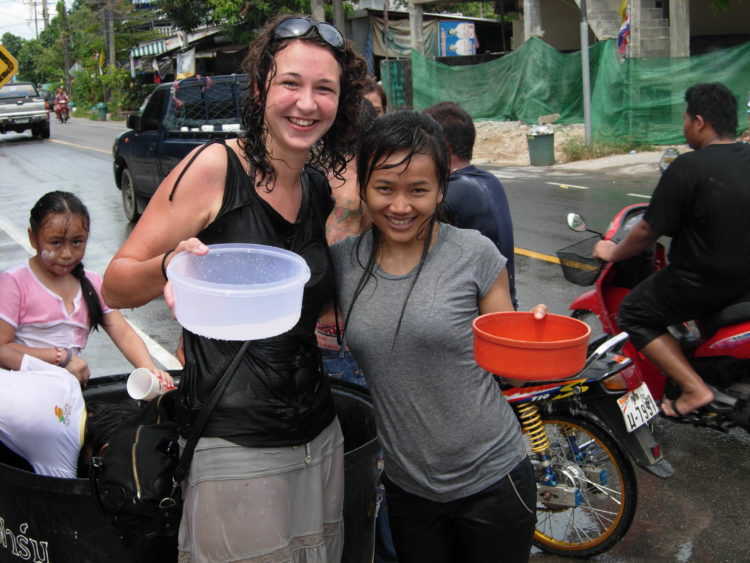
The public water fights are the part of Songkran that most visitors notice first. In many towns and tourist areas, people line the streets with buckets, hoses, water pistols and barrels of water. Pick-up trucks drive past with people throwing water from the back. Motorbikes, pedestrians and anyone looking too dry are considered fair game in some areas.
In the right spirit, it is good fun. The water symbolises cleansing and also helps everyone cool down during one of the hottest months of the year. However, it is important to take part with some consideration for the people around you.
Avoid throwing ice water in people’s faces, spraying motorbike riders, soaking monks, aiming at phones or spraying people who clearly do not want to take part. Songkran is much more enjoyable when everyone joins in with respect for others.
How Visitors Should Behave at Songkran
Songkran is a welcoming and enjoyable festival, but visitors should remember that it is also an important Thai tradition. Join in, laugh and get wet, while being considerate of families, children, older people, workers, monks, motorbike riders and people who may not be taking part.
- Do not throw water at monks, babies, elderly people or people clearly not taking part.
- Do not aim water at motorbike riders’ faces. Wet roads and poor visibility already make Songkran one of the most dangerous times to travel.
- Do not use high-pressure water guns at close range. They can injure people’s eyes and ears and damage phones.
- Do not throw ice water in people’s faces. Cool water is part of the fun, but very cold water can be painful and unpleasant.
- Do not touch or grab people. Songkran is not an excuse to harass women or anyone else.
- Dress sensibly. Wear comfortable clothing that remains suitable when wet.
- Keep your wallet, phone and passport dry. Use a waterproof pouch or leave valuables at the hotel.
- Respect local rules. Some areas have alcohol-free zones, traffic controls and restrictions on where water play is allowed.
- Do not drink and drive. Road accidents increase during Songkran, so arrange safe transport if you are drinking.
The easy rule: if someone is smiling and playing, join in. If someone is working, carrying shopping, riding a motorbike, holding a baby, wearing office clothes or clearly trying to stay dry, leave them alone.
Where to Celebrate Songkran
Songkran is celebrated all over Thailand, but the atmosphere changes from place to place. Some areas are more traditional and family-focused, while others are famous for street parties and full-scale water battles.
Phuket
In Phuket, Songkran is celebrated across the island, including beach areas and tourist towns. Patong is usually one of the busiest places for water fights, while smaller local areas can feel more relaxed and family-friendly.
Around Bang Tao, Surin and other beach areas, expect local celebrations, passing pick-up trucks, water buckets, music and plenty of people getting soaked. If you are riding a motorbike, take extra care.
Bangkok
Bangkok has large celebrations in areas such as Silom, Khao San Road and around major public event spaces. It can be great fun, but also very crowded. Protect your valuables and plan your transport before joining the celebrations.
Chiang Mai
Chiang Mai is one of Thailand’s most famous places for Songkran. The old city moat becomes a centre for water throwing, and celebrations can feel bigger and longer than in many other parts of the country.
Smaller Towns and Villages
Smaller communities can offer a closer look at the traditional side of Songkran. You may see temple ceremonies, family gatherings and gentle water blessings alongside the local celebrations.
Songkran Travel Tips
- Book transport early: many Thai people travel home for Songkran, so buses, flights and trains can fill up.
- Expect traffic: roads are busy before, during and after the holiday.
- Protect your phone and money: keep them in a properly sealed waterproof pouch.
- Wear clothes that dry quickly: lightweight clothing will be much more comfortable once wet.
- Use sunscreen: April is hot, and you can burn even while soaking wet.
- Be careful on scooters: wet roads, reduced visibility and unexpected water can make riding dangerous.
- Keep a dry set of clothes at the hotel: you will appreciate them later.
- Check local dates: some places celebrate for one day, others for several days.
Songkran can be one of the best festivals to experience in Thailand. Respect the traditional side of the festival, enjoy the water fights where they are taking place, and be considerate of the people around you.
More Thai Festivals
These pages have more information and photos from Thai festivals.